
"In Returning and Rest"
The R.E.V.I.V.E. Framework – Part 1: R is for Rest

This is the first in a six-part series unpacking the R.E.V.I.V.E. framework—a Spirit-led, grace-filled, embodied path for overwhelmed Christian women to experience healing and wholeness in God. Each letter of R.E.V.I.V.E. reflects a step on the journey: Rest, Embodied Awareness, Validate Truth, Informed Alignment, Vulnerability in Confessional Community, and Express the Good News.
I don’t know what you’re carrying today.
Maybe it’s exhaustion.
Maybe it’s shame.
Maybe you’ve been running hard—juggling, striving, staying strong.
Maybe everything looks fine from the outside… but something within you is still left unsettled.
Whether you’re burnt out or stretched thin, silently aching or simply disconnected, fighting for an ideal or going through the motions…
This is for you.
You don’t have to carry it all alone.
You don’t need to white knuckle your way.
You don’t have to be “enough.”
You need only rest in the arms of the One who is.
Breathe.
Pause.
Allow Jesus to hold the weight of what you’ve been shouldering.
“Come to Me, all who are weary and burdened, and I will give you rest.”
-Matthew 11:28
Why Rest Comes First
Rest is not first because it’s easy (spoiler alert: it isn’t). It is not first because it comes naturally (hint: it doesn’t).
Rest is first because it’s essential.
It is the doorway to restoration.
It is where we stop flailing, fixing, fighting.
It’s where we start abiding.
Rest is where striving ends and surrender begins.
Where we no longer impose our own will but allow space for God’s will to unfold.
Where we recognize the futility of self-reliance and relax into the providence and provision of God.
Before you regulate, align, confess, or overflow—you must first come to rest.
What is Biblical Rest?
When we think of rest, we often immediately go to mental or physical rest: a good night’s sleep, a nice long nap, turning off our devices, peace and quiet, or a moment of stillness in the rush of our day.
The kind of rest I am referring to, however, is deeper than a brief pause.
It’s more than just shut eye or mental peace.
It’s not just relief.
It’s a returning:
to God’s heart of goodness
to trust in His timing and character
to the place where humanity first lost its way and where we’re invited to recalibrate
Rest is not a reward for doing the work.
It is the starting place where God begins His work on us.
Scripture gives us beautiful language for this:
Shalom is the Hebrew word for peace, but it means far more than the absence of conflict. It means wholeness, harmony, flourishing in right relationship—with God, with others, with creation.
Menuchah is the word used for Sabbath rest. It is a settledness, a resting place. It is the kind of rest that says: This is where I belong.
Naphash is the breath of renewal and is used in Exodus when God speaks of rest as a time to breathe again, to refresh, to be restored.
To rest is to enter shalom, to dwell in menuchah, and to experience naphash—breathed back to life.
The Garden and the Lie
In Eden, the fall didn’t begin with outright rebellion. It began with a seed of distrust.
Eve believed the serpent’s lie:
That God was withholding something good.
That He couldn’t be trusted.
That she had to secure life and liberty on her own terms.
That’s the root of striving.
And it’s still alive in us today.
We strive because we forget who God is.
We grasp because we fear He won’t provide.
We over-function because we feel the weight of the world on our shoulders.
But rest says:
I don’t have to be my own source.
I don’t have to make this happen on my own.
I don’t have to secure myself.
Because God is who He says He is.
This kind of rest rebuilds trust.
In God’s character.
In God’s goodness.
In God’s timing.
What Makes True Rest Possible?
One word: ḥesed.
When I speak of God’s love as the safest place to rest, I don’t mean warm fuzzy emotional warmth or some kind of fleeting inspiration.
I mean ḥesed—the Hebrew word for God’s covenantal love: Loyal. Merciful. Fierce. Tender. Steadfast.
It’s not a flash-in-the-pan feeling. It’s an everlasting covenantal promise.
“‘Though the mountains be shaken and the hills be removed,
yet My steadfast love (ḥesed) shall not depart from you,
nor shall My covenant of peace be removed,’
says the Lord, who has compassion on you.”
-Isaiah 54:10
In the New Testament, we see this same love expressed in the word agápē—a self-giving, unconditional love that flows from the heart of God to all of his creation.
This is what makes rest possible:
Not in performance, but in promise.
Not in self-effort, but in the faithfulness of God.
What About Safety?
“In this world you will have trouble. But take heart—I have overcome the world.”
-John 16:33
Jesus never promised us a life free of pain. Indeed, this world is not inherently safe. Biblical rest doesn’t mean we somehow escape suffering.
But the Gospel offers something better than circumstantial comfort. It offers sōzō.
In the New Testament, sōzō is the word most often translated as "save"—but it means more than just spiritual salvation.
It means:
To rescue from danger
To deliver into safety
To heal and make whole
This is what Jesus offers when He says:
“I will give you rest.”
—Matthew 11:28
Not the kind of safety the world gives: fragile, conditional, circumstantial.
But a safety that is secure, eternal, and rooted in His presence.
It’s not striving disguised as wisdom.
Not control masked as “trauma-informed care.”
Not manufactured through coping strategies or hypervigilance.
It is the presence of Christ
in the fire—alongside Daniel.
in the waters—with Moses parting the seas.
on the waves—calming the storm with just a word.
It’s relational safety… secured not by your effort, but by Christ’s finished work on the Cross.
Even when fear flares.
Even when survival screams louder than Scripture.
Even then, you can return.
Return to the deeper truth.
Return to the Shepherd of your soul.
Return to the safety of sōzō: a wholeness and healing that can never be taken from you.
Rest doesn’t always mean we feel safe. Indeed, with this rest we don’t try to convince our bodies to ignore danger, hyperfocus on comfort, or manufacture calm through sheer willpower.
Rather, His rest invites us to build the capacity to recognize that even in unsafe circumstances, we are not abandoned. Even in pain or discomfort, we can notice who is with us in it. Even in the presence of fear, we are not alone.
This safety in God is not the absence of hardship, but His faithful presence within it.
This safety is not something you secure.
It is Someone who has secured you.
“Even though I walk through the valley of the shadow of death, I will fear no evil—for You are with me.” - Psalm 23:4
The Vertical Axis of Communion
Rest is not passive. It is an active, sacred alignment.
It roots us low—grounded in humility.
It lifts our gaze—exalted in faith.
It centers us on the vertical axis of the Cross.
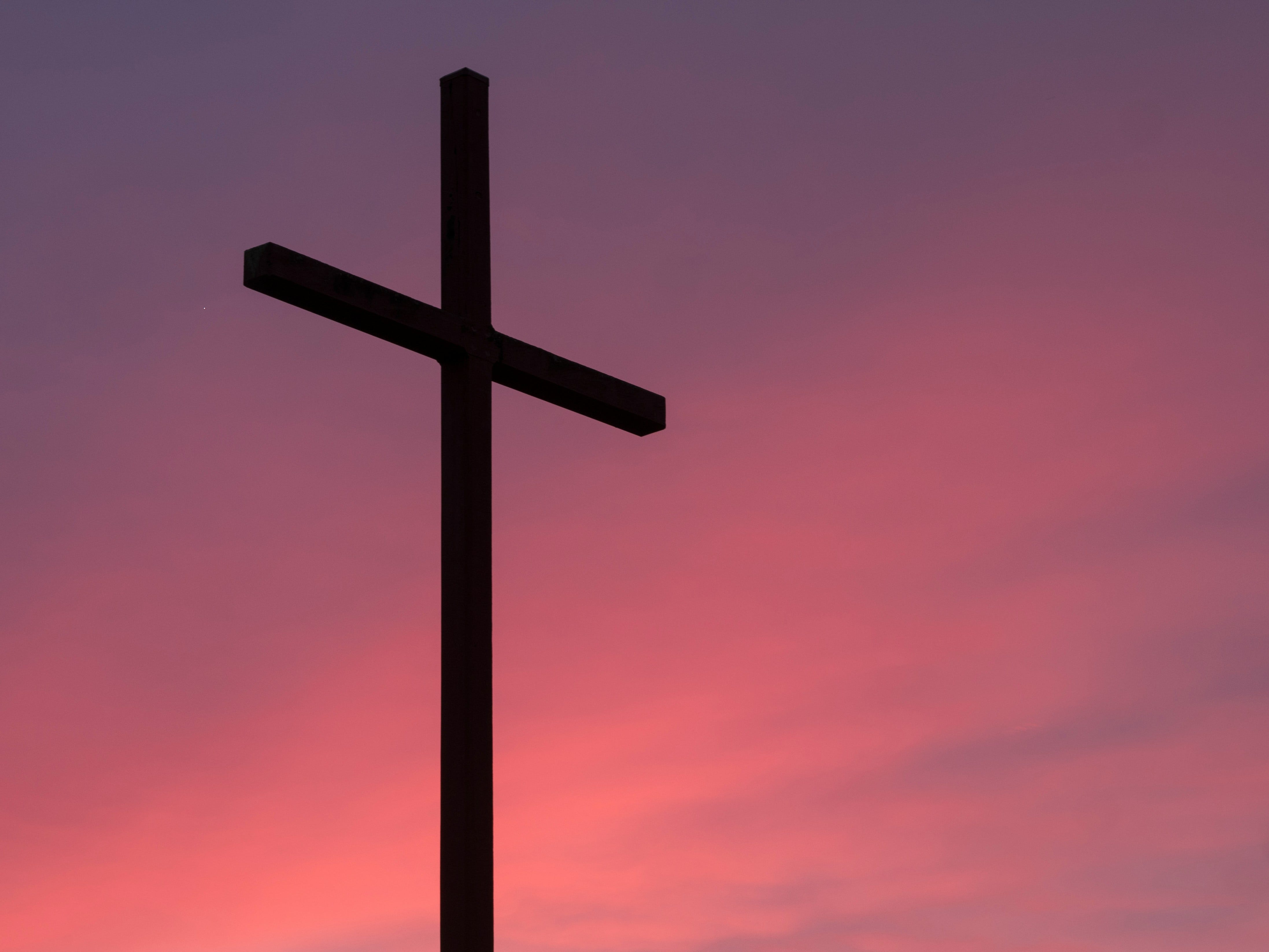
This is where communion begins:
Creation to Creator.
Dust to glory.
Knees bowed low, hearts lifted high.
Rest is a sacred posture:
Rooted in humility
Lifted in faith
Held in ḥesed love
Control surrendered. Identity received. Safety resourced in the presence and promises of God.
“In returning and rest you shall be saved (sozo);
in quietness and trust shall be your strength.”
-Isaiah 30:15
The Sacred Posture of Humility
We start at the base of the cross, for Biblical rest begins down low.
The word for humility in Greek, tapeinos, means “low to the ground.”
“Take my yoke upon you and learn from me, for I am gentle and humble (tapeinos) in heart, and you will find rest for your souls.”
- Matthew 11:28
Tapeinos shares the equivalent root as humus and human, hum meaning “of the earth.”
Tapeinos is considered the proper self-assessment of created beings before their Creator and Redeemer. This term stands in stark antithesis to pride. It allows us to assume the posture capable of receiving grace, to recognize the perfection of God’s will, and to embody the mind of Christ.
Landing here, we recognize our place in relation to God and others. To rest is to embrace our created-ness: Not gods, but creatures. Not in charge, but held and guided.
This humility doesn’t degrade us.
It grounds us. And our bodies know it.
“The Lord God formed man from the dust of the ground…”
- Genesis 2:7
When we kneel down, get close to the ground, breathe slow, and soften into stillness, the vagus nerve begins to fire with signals of safety. The parasympathetic branch, the “rest-and-digest” process of the autonomic nervous system activates.
Down low our bodies remember what our spirits know:
I don’t need to save (sōzō) myself. I am here, held by the steadfast love (ḥesed) of God.
Rest Reawakens the Image of God in Us
Let’s consider the vertical axis of the cross—stretching from dust to glory—and the elevated, heavenly perspective of God.
This is not only the place of divine communion, it’s the axis that lifts us into our full humanness.
God created you with a brain designed for relationship, reflection, and reverence.
Your prefrontal cortex, your nervous system’s “watchtower,” is responsible for higher-order capacities like:
Self-awareness
Empathy
Moral reasoning
Reflection
Spiritual perception
These are not just cognitive skills.
They are sacred capacities—the very features that reflect the image of God in you.
But in chronic stress or survival mode, this part of your brain goes offline.
You become dis-integrated.
Disconnected from God, others, and even yourself.
You live in reaction, not response.
In survival, not surrender.
In fragmentation, not the fullness of who you were created to be.
But when you pause,
when you breathe,
when you kneel,
when you lift your gaze to the One who made you…
you return.
You return to the kind of God you belong to,
not cold or clinical,
but moved with mercy, stirred in His very being.
A God whose love is embodied in His Son, Jesus Christ.
And in His image, we too are invited to become whole—heart, mind, and body restored in compassion.
You re-enter your God-given center.
You remember who you are and Whose you are.
This is not abstract theological theory.
It is embodied truth.
And it invites your own body to come home.
When you rest, you’re not just calming yourself to feel better.
You’re reconnecting with the upward path of the cross.
You’re reactivating the very capacities that mark you as His:
Mercy. Wisdom. Tenderness. Trust.
Embodied Love.
And in returning to His image,
you also return to your own.
Rest Recovers Our True Identity
Rest not only reawakens the image of God in us. It also re-roots our identity in who God says we are.
In self-protective survival, we take on false personas:
Performer.
Fixer.
Avenger.
Orphan.
Victim.
We hustle to prove our worth. We try to sustain that which is fleeting. We grasp for control when we forget who’s already holding us. We resource our sense of belonging in the things of this world.
But rest is where those identities fall away.
Where we are no longer defined by effort, role, or reaction, but by relationship.
We are sheep of His pasture…
Held, not heroic.
Image-bearers, not originators.
Dust, breathed into by the living God.
We are the cared-for, not the self-sufficient.
Dependent on Him… Never divine on our own.
And in this right ordering, there is shalom peace.
In rest, we return to our God-given identity:
Beloved.
Held.
Known.
Safe.
In Christ.
Let us recall the Hebrew word menuchah. Its root, nuach conveys the meanings:
To settle after turmoil
To be placed or established
To dwell with permanence or security
Menuchah was often used to refer to the Promised Land, representing the end of wandering, the arrival into peace, the fulfillment of God’s promise.
This rest is a state of belonging, completion, and trust in God’s provision and presence, and it forms our identity as a child of God.
This is why rest is not simply repose—it’s remembrance.
We rest not to escape who we are,
but to root and settle into who we’ve always been in Him.
“Truly my soul finds rest in God; my salvation comes from Him. Truly He is my rock and my salvation; He is my fortress, I will never be shaken.” - Psalm 62:1-2
This is the invitation of Biblical rest within the R.E.V.I.V.E. framework:
To find rest, because your well-being is not achieved through greater effort—but in a restored relationship with God. And remember that peace is not something you earn, but Someone you abide in.
Let this be your first breath:
I am not alone.
I am not enough.
But He is.
And I am held.
Lord,
You are my refuge and resting place.
You invite me to come—not when I’ve earned it, not when I’ve fixed myself,
but now, as I am—tired, striving, and in need of grave & mercy.Thank You for being the God who holds me,
the Shepherd who leads me beside still waters,
the Father who calls me beloved.Teach me to lay down the burdens I was never meant to carry.
Loosen my grip on control.
Quiet the lies that say I must do more to be enough.
And anchor me in Your covenant love.Restore my soul.
Reawaken the image of You within me.
Help me to remember that I am dust—breathed into by Your Spirit,
and wholly safe in the arms of Christ.Today, I choose rest.
Not as escape, but as return.
Not as passivity, but as worship.
Not as weakness, but as trust.Thank You for holding me steady in Your ḥesed.
Thank You for saving me with Your sōzō.
Thank You for loving me with Your agape.In Jesus’ name,
Amen.
Coming next in the series…
E is for Embodied Awareness: How cultivating a compassionate connection with your body (soma), recognizing your self-protective survival patterns, and building an embodied experience of God’s presence can lead to grace, peace, and well-being.
Subscribe to follow the R.E.V.I.V.E. journey.
And if you’ve received value from reading about rest, share this post now.
Contribute a one-time donation to support this ministry.
Such life giving truths - thank you for sharing what the Lord has put on your heart.
Beautiful, thank you :)